
Doubt as a Spell Caster
20/30 - Learning to fly in the dark

Doubt is the mind killer, not fear.
Throughout my childhood, I read voraciously. Every Nancy Drew in my school library. The twins Bobbsey and Sweet Valley. Collections of magical short stories and novels of adventure, mystery, and coming-of-age. Stories devoured late at night, bookmark always close at hand in case my parents noticed the light peeking out under the crack of my door. One series that captured my imagination throughout my youth, the limbo years between child and teen, followed a seventeen-year-old New Yorker named Gaia.
Gaia was born without the fear gene.
Of course her father was a secret agent of sorts, her mother died when she was young, and she lives with her absent dad’s CIA friend and his wife, only returning to their Greenwich Village brownstone for nightmare-filled sleeps and to wash the blood off her clothes after yet another battle in Central Park. Because being fearless for Gaia translates into “pretend to be weak and vulnerable at night so men will prey on you and when they try to take advantage of you, beat them up.” Her form of justice is kind of like Carey Mulligan’s character in Promising Young Woman except without the femicide at the end.
Gaia is a trained fighter, speaks multiple languages, and does not have the physical and nor the mental capacity to feel fear. She can handle herself. But the absence of fear gets her into trouble. She takes risks no rational human would. It made for a great story.
I always thought the book series would adapt well into a TV show. Gaia is a striking character—in the book described as blonde, blue-eyed, tall, and wiry. She only has a few acquaintances, but as the plot thickens so do the complexities around her. The lone wolf finds friends, which brings both comfort and danger. Like Nancy Drew, she has her crew, but the genius comes from within.
Hollywood beat me to the punch in adapting it, with the WB Network (RIP) greenlighting a pilot starring Rachel Leigh Cook as 23-year-old FBI agent Gaia Moore. It was a slap across the face akin to CBS trying to make Nancy Drew into the NYPD’s young homicide detective. I didn’t love that they turned a tall blonde character into a short brunette, but making Gaia into a law enforcement agent was the real gut punch. Because the point of Gaia, just like Nancy Drew, is that she operates outside of the system.
Is it because they’re women that we can only imagine them powerful within the known context of justice? Gaia could have been adapted into a Bruce Wayne type—beautiful and wealthy to the public, cloaked fighting crime at night—but instead they made her into a FBI agent. Unsuccessfully. The show never made it past the pilot.
Whoever developed the show ignored everything that made the story interesting, trying instead to fit it inside the tiny little procedural box: CSI: Fearless, Law & Order: Predictable, The Real Housewives of FBI Assassins. Hollywood, for all its creative capacity, often lacks true imagination and vision.
“[Superheroes] remain parasitical off the villains in the same way that police remain parasitical off criminals: without them, they’d have no reason to exist.”
David Graeber, Super Position
If I read 10 pages a day, I will finish The Dawn of Everything by the Davids Graeber and Wengrow before this 30 day writing challenge ends. I find the book equal parts fascinating and boring, and right now I’m pushing through the boredom. It’s an overview of human civilization that questions the dominant narrative hanging over our heads by laying out countless examples of complex, decentralized societies that didn’t rely on wealth inequality or the state of hierarchy. It reveals how presumptive we have become in the modern world about the inevitability of suffering. “Oh, well,” we collectively shrug. “It is what it is.”
We lost David Graeber in 2020, a month after he finished writing TDOE with co-author David Wengrow, and it is a loss that will never stop stinging for anyone who’s meaningfully engaged with his work. As an anthropologist and activist, Graeber provided windows of clarity into an otherwise muddled view of the world. There is no doubt in his work. He is not afraid to point to uncertainty, but he never rests upon it. The facts are the facts, and the math adds up.
I’m starting to see that my biggest flaw is doubt. If I know the facts, why am I questioning them? Because the world will actually be okay if we cut down most of the trees? Or because I’ve been gaslit to the point that my brain is addled and unclear? Batman is a hero! Pipelines are good for the national interest! If we just keep raising the minimum wage, everything will be fine!
When I ran for MLA (member of the legislative assembly—a state representative to Americans) in 2020, I debated several existing MLAs including Adrian Dix, our current Minister of Energy and Climate Solutions who was serving as Minister of Health at the time. Our question was about British Columbians struggling with rising costs. What would we do to fix it?
Dix spoke clearly about raising the minimum wage (which the province did follow through on) while I spoke about the need for a fundamental change to our economic system. I felt crazy, there in my room on the Zoom call, debating one of the most powerful people in our government, as viewers nodded along to both of us. I know my message resonated with constituents, as I came second in votes at the end of it all, but I felt too filled with doubt at my own words and convictions to really drive the point home. Hopefully those watching didn’t tap in to my uncertainty, but, for me, the sheer fact that I even have to step into these spaces and state these arguments makes me feel insane. Where are all the adults in the room? Why am I here? How do so few people understand?
“The Joker is a pure force of self-creation, a poem written by himself. His only purpose in life appears to be an obsessive need to prove to others first, that everything is and can only be poetry—and second, that poetry is evil.”
David Graeber on Christopher Nolan’s The Dark Knight
The groundswell to overcome the status quo—the current reality—continues to grow. In order to sweep up the mess, it will have to grow bigger and bigger. I do not think that this will able to happen without a clear sense of the stories that shape us. Especially superhero narratives. What are they defending?
To build new worlds we need vision. Visions not founded on faulty beliefs or championed by false idols. We need heroes rooted in the collective. Systems of oppression can crumble to dust. It’s just that we keep participating in them, believing that said systems are a necessary part of a civil world. So we thrust up heroes to “protect” us from the bad guys who want to reimagine them, instead of a imagining the hero as someone who wants to upend the status quo instead of defending it.
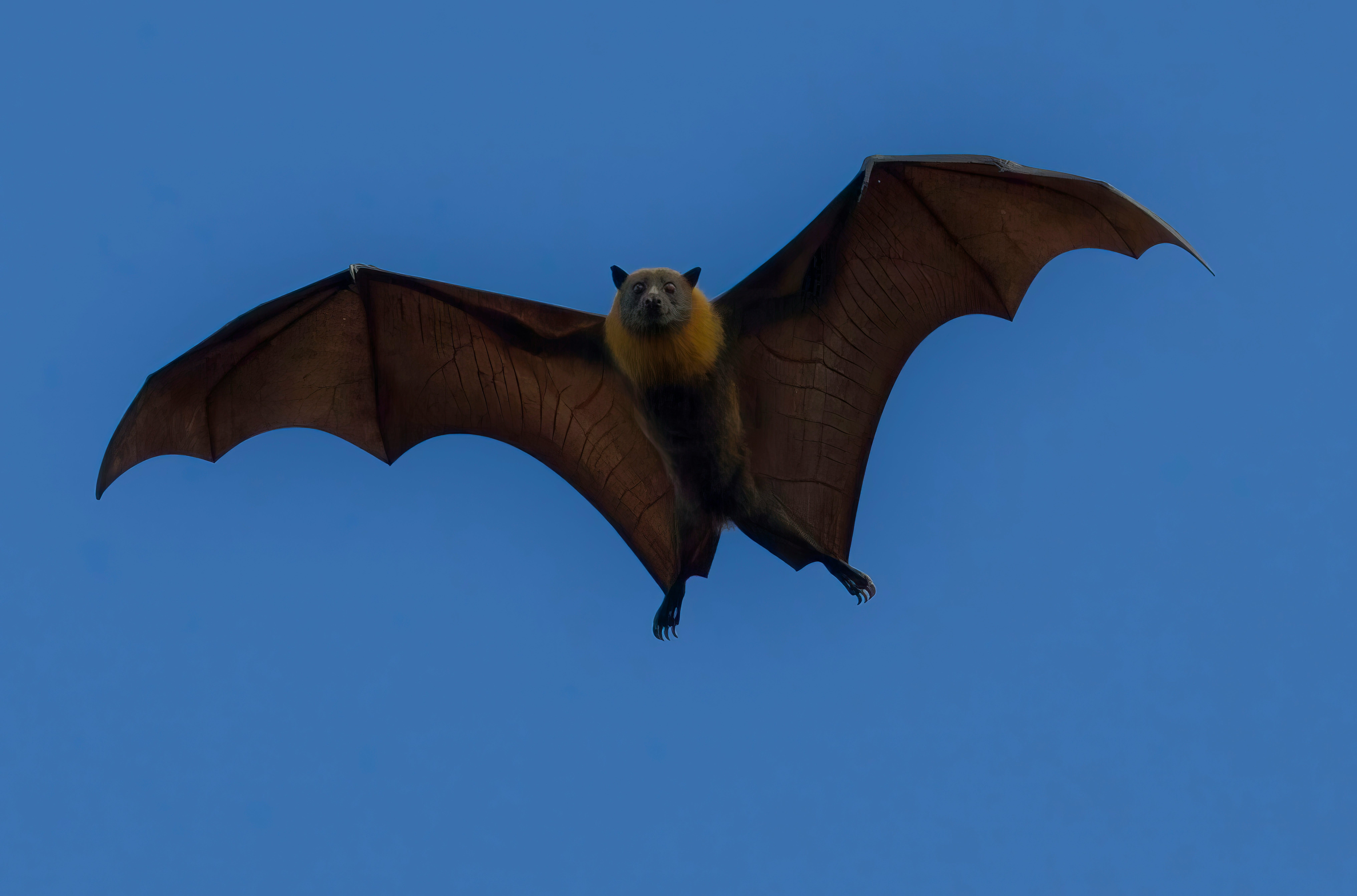
Now that we’ve wrapped our thoughts for the day, will you give this post a “like?” Especially if you’re a man lurking in the shadows, reading my work every day, but never sharing your social capital. Let’s reimagine the status quo together! Slip on that cloak (it looks good on you ;)) and join me in the roar for a better world.